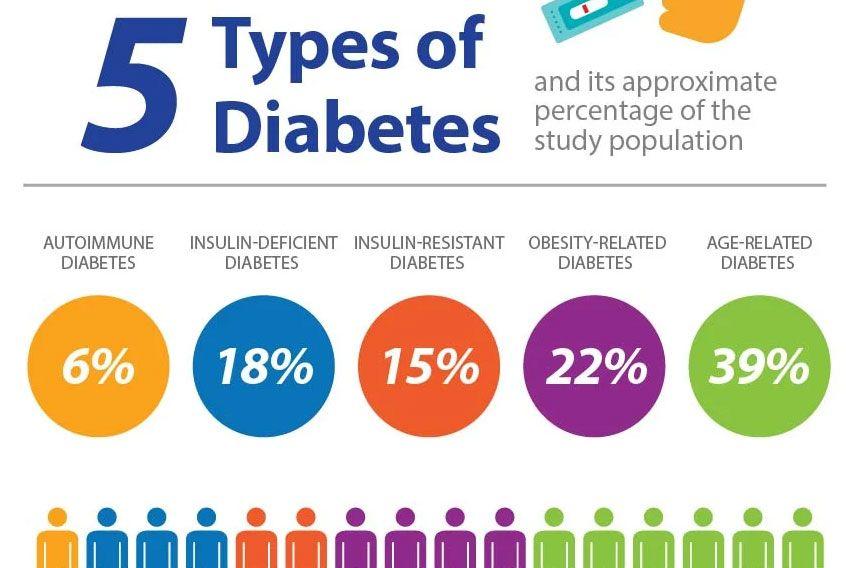
Obesity is recognised as a leading cause of insulin resistance. It therefore contributes to the development of Type 2 diabetes. This is particularly true for a central distribution of body fat, associated with a range of metabolic disturbances. Weight management is crucial in controlling blood glucose levels in people with Type 2 diabetes, although from UKPDS there is evidence that to normalise glucose tolerance usually requires major weight loss. Studies suggest that at least 80% of newly diagnosed patients with Type 2 diabetes are overweight and weight loss in people with Type 2 diabetes who are overweight increases life expectancy. Obesity is an additional risk factor for coronary heart disease and stroke. All cardiac risk factors (glycaemia, hypertension, lipids) are improved with weight management.
This is true for individuals with Type 1 diabetes as well as Type 2 diabetes. However, it is also important to make sure that energy requirements are adequate in children and adolescents with Type 1 diabetes.
Dietary strategies for weight management should be based on realistic target weights. Assessment of target weights and the appropriate level of energy restriction is not a precise science. Equations are available for estimating basal metabolic rate and daily energy expenditure from body weight in kilograms and activity level, when prescribing calorie-controlled diets, see
Table 1.1.
In general, long-term lifestyle changes and strategies are more likely to result in sustained weight loss. Realistic calorie deficits of 500 kcal/day usually produce better end results than very restrictive diets. Strategies to support individuals trying to lose weight may range from individual counselling to group therapy.
The use of very low calorie diets (VLCDs) in people with diabetes has however been shown to have positive effects on plasma lipids, lowering triglyceride levels and raising HDL cholesterol. Most of the benefits relate to energy restriction not weight loss. Although more weight is lost over a 3 – 6 month period than using conventional diets there is no evidence that in the long term (1 – 2 years) the continued benefit of using VLCDs is maintained. VLCDs should only be used in a specialist setting as complications of VLCD therapy can include alterations in body composition including bone loss and possibly loss of cardiac muscle. As a generalisation the use of anti-obesity drugs should be restricted to specialist medical centres in the absence of large-scale studies of their application in diabetes. The Royal College of Physicians produced guidelines for the use of anti-obesity drugs for obesity treatment.
Individuals who are overweight should have the necessary advice and support to reduce their calorie intake and to increase their energy expenditure in order to shift their energy balance and weight in the direction of a more ideal BMI. Sustained weight loss and prevention of weight regain are important goals which are preferable to more rapid weight loss which usually results in excessive loss of lean body mass. Even modest weight loss confers benefits to health. Whenever possible those people who are overweight should be offered a multi-disciplinary structured approach to weight management.
Dietary advice should take into account an increase in physical activity, which may also facilitate weight loss and help to maintain muscle mass.
Normally, people’s appetites increase with exercise automatically.
However, for those with Type 1 diabetes adequate or additional carbohydrate before, during and after exercise as well as insulin adjustment needs to be anticipated, see Diabetes and Physical Activity section. For those people with Type 2 diabetes on oral hypoglycaemic therapy, adjustment of medication is usually not necessary unless on sulphonylureas where hypoglycaemia may be a risk with sustained exercise.
The level of activity will depend on age and degree of fitness but moderate activity (walking) for at least 20 – 30 min a day will be beneficial. Adjustment of medication for both Type 1 and Type 2 may be necessary if weight loss occurs and is maintained in the long term.