Carbohydrate metabolism in normal pregnancy as measured by glucose changes very little. Pregnant women have a slightly lower blood glucose level then when they are not pregnant but you certainly don??he placental growth hormone just keeps coming out. We don?? 26 weeks of gestation in the average mom. We test everybody at 26 weeks of gestation. How should we do the test? You do much better if you do this in a fasting state because in terms of endocrinology, you have the law of initial value. That means whenever you do a challenge test whether it is a glucose challenge or GNRH, how high you go depends on where you start. If you start here and give a challenge you go here. If just had Big Mac and a malted milk and your glucose is up here and now you take 50 gm, you make go into the abnormal zone. If you test everybody in a fasting state they will all go to the same level and that means if you do it fasting you will have many fewer false positives challenge tests, and you will have to do a lot less in the way of glucose tolerance tests.
In terms of sensitivity, a fasting challenge test is much better then is one where the women has eaten something prior to coming into the office. You have to decide what you are going to do. It may be from a compliance standpoint and difficult to get everyone in fasting, but if that is possible you have a much more sensitive and specific test then if you do it just randomly as they come into the office. We have to put a cut point into that system now to decide who gets further testing and who doesn??e tolerance test is very low and not cost effective. Our cut point is 140 mg per dL in plasma. They also showed when you got a very high screen over 200 they are all diabetics. If your screen is over 200 you ought to check the fasting levels before you do a glucose tolerance test because it may be high, and you may put this woman into ketoacidosis. If you are between 200 and 140 you need a glucose tolerance test. If you are under 140 you pass the screen without any further testing being necessary.
The cut point is 140, and if she is between 140 and 200 we go to a three-hour oral glucose tolerance test. That test is different then what you use in adult medicine. We use a 100 gm load where in medicine you use a 75 gm load. We take 4 points over three hours, and these other cut points, 105, 190, 165 and 145. This is plasma. If you are doing this in your office on blood you are going to have 15% lower value. You have to decide what you are going to do either blood or plasma. Obviously the blood value will depend on the hematocrit because red cell don??ey are not normal. They are borderline abnormal but remember that the stress on their system is going to get worse as they move towards term. They may well then turn into diabetics in the last few weeks of pregnancy. If the one of the values is elevated repeat the glucose tolerance test in one month and that in many cases will become abnormal.
We have our gestational diabetics and now we have to look at what does this disease do, what are the risks and how do we manage it. The risk is for two people. First we just identified mom as having an abnormality and that means sometime in her life she is very likely to show clinical diabetes. We have to tell she is not normal, she has to watch her glucose as she goes through life, and we should attempt to put some prevention in there. The prevention basically is don??nately it is a low risk problem and requires very little in the way of pregnancy management. For mom we just said her problem is later in life, and she has to screen for and watch for onset of diabetes. The only risk for the baby is macrosomia. It is not al the other things we are going to talk about in the insulin dependent diabetic. Our only problem for the infant then is getting out through the vagina at the time of labor. Babies don?? about the woman who comes into your practice, and she may have been taking insulin for 10 years as a diabetic. What do we know about that? We know three things. During the pregnancy the problem is going to be for baby and not mom. Mom is going to be just like she always was. I will show you a tremendous amount of data that says that glucose that causes all of the problems for the baby. Too much glucose creates problems for the infant. Remember normal women have a lower glucose value in pregnancy than when they are not pregnant. We end up with an outcome of the pregnancy that is going to be normal. She may get infections, particularly in the urinary tract. She can have changes in her blood vessels with diabetes and that will show up. She may have excess accumulations of amniotic fluid. When we talk about hyperglycemia we have seen already now why that is. Her placenta is making growth hormones, and the growth hormone is creating insulin resistance and that means what she is injecting every morning is having less and less activity as she goes to term. Therefore, if she doesn??that you need more insulin because you have insulin resistance and you get hyperglycemic.
What about infections? We know diabetics have infection at an increased rate, but the one that is of particular importance in the antepartum of the time period for us is the problem of urinary tract infections. It is doubled in frequency in the woman with diabetes because she has glucose in urine and that is a substrate for the bacteria. That is a problem because asymptomatic bacteria have a 25% chance of developing pyonephritis. We are going to do several cultures on this woman. Every pregnant woman ought to have a culture of her urine at the first prenatal visit. I never do urinalysis because that doesn??d more hypertension complicating the pregnancy. It is not unexpected because you have arterial disease, and she gets pregnant and as a result gets hypertension. Those are mom??c. We have all been there. We have a normal beta cell mass. After those beta cells see hyperglycemia for about one week they learn to release to insulin. All newborns are diabetics and by about a week of age they convert back to normal. They stay there in most cases. If mom??very narrow window of time. Here in that very narrow window something happened, and we ended up with a congenital anomaly. What happened? The first thing to look at is the high glucose. Many people have looked at that.
If any one hemoglobin A1C level going through that 3rd to 6th week of gestation were normal, then the anomaly rate is no different then what you would expect, 3%. As you increase the glucose level in that 3rd to 6th week your A1C level is going up. You can see anomoly rates get up to 20-25%. Glucose that is elevated in that 3rd to 6th week can create disruption in terms of embryogenesis and end up with either congenital anomalies or if they are very severe spontaneous abortion. How does it do it? It does it by interfering with metabolism and creating free oxygen radicals. We now know that the mechanism is the production of free oxygen radicals that disrupt membranes and as a result of that embryogenesis doesn??ocin, and you can see anomoly rates here now. If you talk about control animals the anomoly rate was 8%. If you talk about the hyperglycemic moms you can see the anomaly rate doubled at 16%. If the moms are treated with insulin so they are diabetic but they are normal glucose, the anomoly rate is not increased. If mom is carrying a fetus that has this enzyme now to get rid of free oxygen radicals it doesn??before they conceived, many anomalies occurred. It changed the rate of anomalies from 11 to 1%. That is an important concept in managing your patients. We can summarize the first half of pregnancy. We can say this; hyperglycemia in mom will produce an increase in spontaneous abortion and congenital anomalies. The mechanism is the production of free oxygen radicals. The time that is critical is the 3rd to the 6th week of gestation. Sacral agenesis is unique, but it is rare. Most of the anomalies are in the cardiovascular or neural tubes. That means for the fetus that survives in the second half of pregnancy we need to study that fetus carefully to see whether it has an anomalie. We do echocardiography on these fetuses to look for cardiac problems that may need special care as soon as that baby is delivered. That says for our women who we have in our practice who are thinking about getting pregnant, we need to do two things which are get in control before they ovulate and put a ovulation indicator in place so that when they do ovulate you know it and now you have timed the pregnancy. You know from all of the presentations that have been going on here and what you read that there is no other way to know how far a pregnancy has gone if you don??tor you don??e airplane to go to Tampa this afternoon, and they said the pilot crashes 50% of the time, I would take the train. You have to remember now that when your diabetic patient has macrosomia you are two times as likely to have a sever shoulder dystocia and the problems resulting from that. Also you create a health problem for this baby for life.
Fat newborns end up fat people. As you stimulate fat cells to develop in the fetus you create the environment that will stay for life. Obesity in adulthood is really an obstetrical problem. We have control of that. If you let the fetus become fat you have a created a health problem for that child and adult forever. What other problems do we have? This is a mircrograph of the lungs from a baby that expired with respiratory distress, and it is classic in that the alveoli are collapsed. In some of the alveoli you see this pink membrane. This is hyaline membrane disease. We know a lot about lung development and function in the fetus and neonate. For any gestational age the infant coming from a diabetic had many more times the problem of breathing than did the same aged baby coming from a normal woman. Diabetes leads to respiratory distress in the neonate. There are 4 hormones that regulate the function of the lung of the fetus. One of these is cortisol, and we know that cortisol can accelerate lung maturation in the fetus by turning on an enzyme in the type II pneumocyte of the alveoli. When we study that enzyme we see that if you give cortisol you produce more surfactin. For every enzyme that is turned on by cortisol whether it is in the liver, lung or muscle it is blocked with insulin. If we do the same experiment with a lot of insulin around nothing happens. If that fetus is hyperglycemic, and it is releasing a lot of insulin then when it releases its cortisol nothing will happen in its lung. It comes out with a lung that doesn??single visit. I also get hemoglobin A1C once a month. If all of those are okay, now I am in the box. You can see here that excellent relationship between 24-hour urine glucose and hemoglobin A1C. It is an expensive test that will tell you a very great amount about her glucose control. Hemoglobin A1C is extremely important in monitoring because it tells you about previous four weeks.
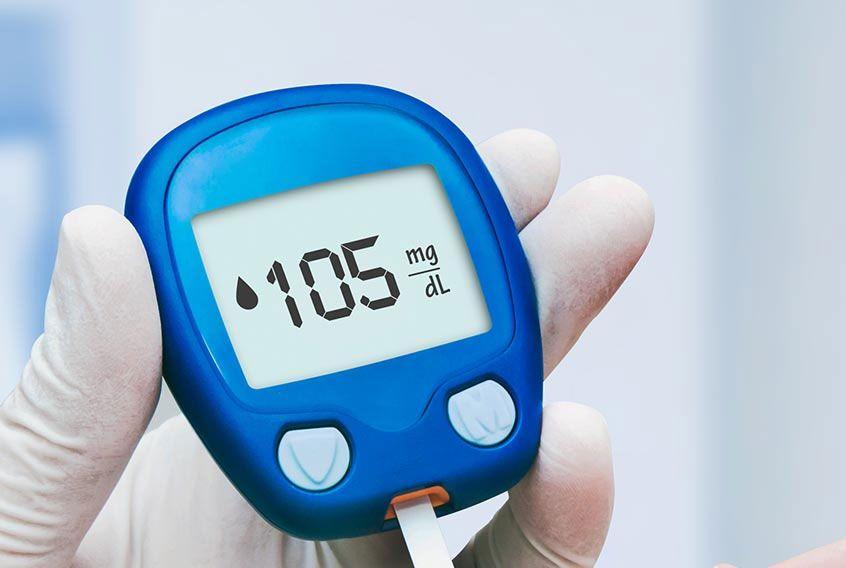
Plasma glucose and A1C in pregnant women. Glucose goes down in pregnancy. In the middle of pregnancy it is lower than it was in the beginning or end. Actually the low point is at 20 weeks. Hemoglobin A1C follows that and A1C goes down and its four weeks later. This shows you what happens to glucose. It also shows you that A1C is tracking the previous four weeks of blood glucose control. What we call good control is fastings down around 70 to 80, after a meal under 120, 24-hour urine dipping no more than 1+ and hemoglobin A1C drops to around 4 or 5. Remember when she does her bloods at home she is measuring blood glucose. That is 15% lower than plasma glucose. If you have her plasma at 105 when she measures her blood it is going to be 90. Just by moving to her machine don?? is enough insulin. There is no limit on how much insulin you get. If we give 20 units or 2000 what we want is an end point, and the end point is normal blood glucose. Finally, timing delivery. This is critical. There are only two places that the infant can die. This makes perinatal medicine very easy. It is either going to die in the uterus, or it is going to die in the nursery. This all we have to worry about. We see in the B curves over here the chance of dying in the uterus. If mom is a perfectly normal woman the risk for that fetus does not go up until 41 weeks, and then it goes up at each week after up. If mom has a problem like hypertension, insulin dependent diabetes, then the risk for dying in the uterus can go up way back in here. We are going to have to put in place some sort of test in this pregnancy to see the risk of dying inutero. The curves over here represent death in the nursery. In the nursery if you don??ks of gestation those vessels are thick, and you no longer get a major bleed in the central nervous system. Once you are past 32 weeks you don??eir dates. If I don??rcus rather than weight change there would be straight line all the way up here because in those last four weeks the fetus in laying down fat. It is putting more calories down for every gram of deposit as opposed to four. We have a tremendous growth rate here. If that infant continued to grow at that rate, at the age of five it would weight two tons. As a result of that enormous metabolism that is going on that fetus is much hotter than mom. It is a half a degree centigrade hotter than mom is. The heat that is generated by this rapid metabolism is carried by blood across the placenta, and mom is loosing it by convection off her skin. We all know that we deliver an LDR today the first thing that happens after mom has the baby the mom start shiver. She just lost her little heat pump. Then we need three critical substrates that the fetus uses for growth. The first substrate that goes across is oxygen. Oxygen goes across this membrane by simple diffusion. That means physiologically there is absolutely no impairment to transport across the membrane. Oxygen goes right straight across. There is no barrier to transport. The regulation of oxygen transport is really dependent on two things. How much oxygen is there in mom??strate is amino acids, and they are actively transported into the fetus. Every amino acid is in higher concentration in fetal blood compared to mom??progesterone, cortisol, estrogens, human placental lactogen, and prolactin, all of which accompany pregnancy
B. Routine blood glucose screening of all pregnant women is critical for the detection of abnormalities and should be done at 24–28 weeks. The screening test draws a plasma glucose level 1 hour after a 50 g oral glucose load; normally the value should be <140 mg/dL. If it is above this, a 3-hour test is necessary, using a 100 g glucose load; the upper limits of normal for the plasma are fasting–105, 1 hour–190, 2 hours—165, and 3 hours–145 mg%. If two or more values are elevated, the woman has diabetes. If one value is elevated, the test is abnormal and needs to be repeated in 1 month
C. Gestational diabetes (GD) is common, and it poses a low risk for mother and fetus. It can usually be treated by diet alone. It carries a risk for macrosomia and, therefore, needs little monitoring until term, when ultrasound (US) studies of fetal weight are needed before vaginal delivery. Nonstress tests and home glucose monitoring of the diet-controlled GD are not necessary. The gestational diabetic may benefit from insulin treatment if the fasting blood glucose is not controlled by diet alone. The risk for the mother is the development of diabetes later in life
D. Insulin-dependent diabetes ODD) is a high risk for mother and infant during pregnancy. The maternal mortality in diabetic patients who become pregnant is <1%
1. There are six frequently complications
a. Hypoglycemia
b. Hyperglycemia
c. Urinary tract infections (UTIs)
d. Retinopathy
e. Hydramnios
f. Hypertension
2. In general, hypoglycemia occurs during the first half of pregnancy, and hyperglycemia occurs during the last half. Hyperglycemia can have an adverse effect on the fetus. Most of the problems for the infant of the diabetic mother (IDM) seem to be caused by hyperglycemia. Because the pregnant diabetic has varying amounts of glucosuria, blood glucose control can only be determined by frequent blood glucose studies and not urine studies. Good control is the most important pan of pregnancy management. Insulin requirements usually increase 2-3 times between weeks 20 and 30 of gestation. Following delivery, they decrease precipitously
3. Persistent glucose in the urine plus the stagnation of urine with hydronephrosis, which normally accompany pregnancy, combine to increase the frequency (20%) of UTIs. Urine cultures should be taken several times in pregnancy. Retinopathy can also advance in pregnancy and may need laser treatment. An ophthalmologic exam is needed each trimester
4. Diabetic pregnancies are often complicated by hydramnios and hypertension
II. Problems of the Infant of a Diabetic Mother
A. Six most common
1. Spontaneous abortion
2. Congenital anomalies
3. Macrosomia
4. Hypoglycemia
5. Respiratory distress
6. Fetal and neonatal deaths
B. The spontaneous abortion rate is elevated when poor glucose control occurs in early pregnancy. The incidence of congenital anomalies is increased. Sacral agenesis is the most common defect is intraventricular septal defect, and a unique anomaly. The anomalies occur between the third and sixth week of gestation and are related to hyperglycemia. The occurrence of excessive oxygen-free radicals are responsible for the anomalies. There may be a high frequency of both fetal and neonatal deaths, and the cause of the former is not always known. The IDM often has macrosomia, and because its trunk is disproportionately large, the risk of shoulder dystocia is increased two times. Neonatal hypoglycemia and respiratory distress are common. They may also develop hyperbilirubinemia and hypocalcemia in the neonatal period. As the child grows, it suffers an increased risk of developing diabetes mellitus (10%), nervous dysfunction, and pancreatic fibrosis. As a group, these children tend to be shorter and heavier than their peers
III. Management of the Pregnant Diabetic Patient
A. Maternal blood glucose levels must be kept as near normal as possible to achieve optimal fetal salvage. The glucose level is best controlled using frequent blood glucose determinations done by the patient at home, a proper diet, and an adequate amount of insulin. The diet should be 300 calories above the mother’s prepregnancy diet. Ideally, the fasting blood glucose should be less than 90 mg% and the 1-hour pc blood glucose <140 mg%. In addition, measurements of the 24-hour urine glucose excretion, hemoglobin A1C level, and amniotic fluid glucose concentrations may aid in determining the adequacy of control
B. The infant should be delivered when it is mature, which is usually at about 38 weeks of pregnancy. The timing of delivery is accomplished by utilization of both serial fetoplacental function testing (FPT) and fetal maturity testing (FMT). The most practical FPT results are with weekly oxytocin contraction tests (OCT), which are started at 32 weeks gestation. The most reliable FMT results are measurements of the amniotic fluid phosphatidylglycerol content. The method of delivery does not seem to influence the results significantly, except that macrosomic infants should be delivered by cesarean. US assessment of fetal weight is important. Despite mature test results, the infants may have RDS and other problems requiring careful neonatal monitoring and, therefore, these infants should be delivered in a tertiary center
IV. Postpartum Contraceptive Advice
–In view of the women’s metabolic defect, barrier or intrauterine devices are the best methods